
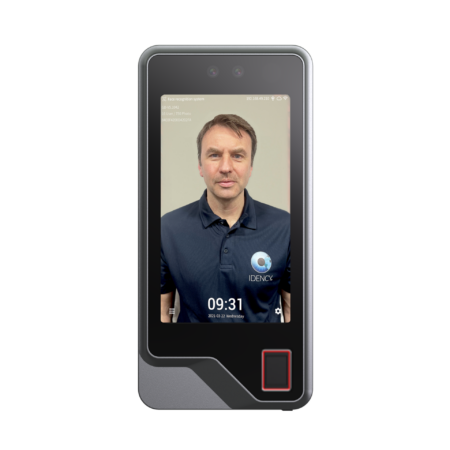
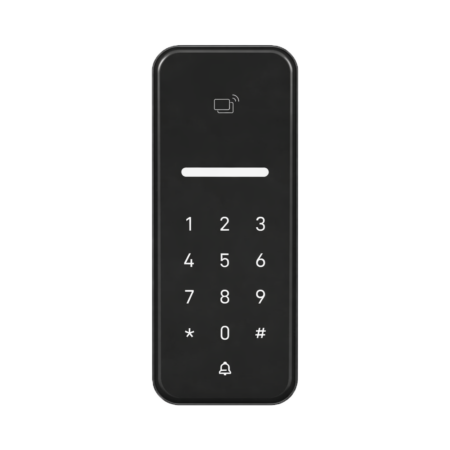


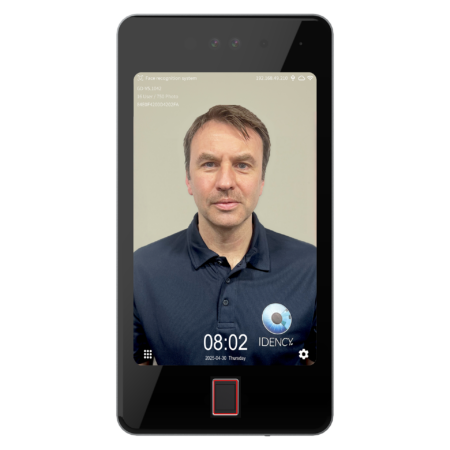






























Facial Recognition vs Fingerprint Recognition: Why Modern Businesses Are Choosing Facial Biometrics
Businesses looking to implement biometric authentication often compare facial recognition and fingerprint recognition. While both technologies use unique biological characteristics to verify identity, advances in facial recognition have made it the preferred choice for most modern organisations because it’s faster, more hygienic and significantly easier to use.
Quick Answer
For most organisations, facial recognition is now the superior biometric solution. Modern facial recognition devices provide:
Fingerprint recognition remains available but is increasingly used in legacy deployments or environments where existing fingerprint infrastructure is already in place.
Why Facial Recognition Has Overtaken Fingerprint Recognition
The biggest difference between the two technologies is consistency. Facial recognition works with almost every user, every day, with minimal interaction. Fingerprint recognition relies on obtaining a high-quality scan every time but in real-world environments, this can be challenging. Modern facial recognition terminals simply allow users to approach and be recognised almost instantly.
Facial recognition advantages:
The Problem with Fingerprint Recognition
Fingerprint technology can work well in controlled office environments, but many organisations experience reliability issues as workforce size and environmental factors increase.
Manual workers often develop worn or damaged fingerprints through regular use of tools, machinery and physical labour. This can make fingerprint recognition inconsistent or unreliable.
Dry or cracked skin can affect fingerprint quality and increase rejection rates.
Cold weather can affect circulation and skin condition, making fingerprints harder to capture consistently.
Fingerprint readers are touched thousands of times per week, increasing wear and maintenance requirements.
Water, sweat and moisture can prevent accurate fingerprint capture.
Dust, grease, oil and workplace containments can reduce fingerprint reader performance.
Employees wearing gloves must remove them before authentication, slowing down the clocking process.
In high-traffic environments where many employees use the same device, fingerprint readers can become a bottleneck. Slower scan times and retry attempts during busy periods such as shift changes can cause queuing and delays.
In practice, organisations with warehouse staff, engineers, manufacturing workers, logistics teams, construction workers and field-based personnel most commonly encounter these issues.
Why Modern Facial Recognition Performs So Well
Facial recognition technology has improved dramatically over the last decade. Today’s devices can:
For organisations with large workforces, multiple sites or high-throughput clocking requirements, this provides a significant advantage over fingerprint-based solutions.
Does Facial Recognition Work Outdoors
Yes. Modern facial recognition terminals are designed for both indoor and outdoor use. Weather conditions, temperature changes and environmental factors generally have far less impact than they do on fingerprint recognition.
The main consideration is installation location. Like any camera-based system, extremely strong backlighting or direct sunlight behind the user can create silhouetting. This is typically addressed through correct terminal positioning. In most outdoor installations, facial recognition performs exceptionally well.
Which is More Hygienic?
Facial recognition is significantly more hygienic because it is completely contactless — users do not need to touch a shared device surface. This makes it particularly attractive in:
Fingerprint readers require repeated physical contact from every user.
Which is Faster?
Facial recognition is generally faster. Users simply approach the device and are recognised automatically. Fingerprint authentication requires users to position their finger correctly, hold it in place, wait for the scan and retry if it fails. Across hundreds of daily clockings, the time savings can be substantial.
Which Is Better for Time & Attendance?
For modern workforce management, facial recognition is typically the preferred biometric method. This is why many organisations replacing older biometric systems are moving from fingerprint readers to facial recognition terminals rather than installing new fingerprint hardware. Key benefits include:
Facial Recognition vs Fingerprint Recognition
| Feature | Facial Recognition | Fingerprint Recognition |
|---|---|---|
| Contactless | ✓ | ✗ |
| Works with manual workers | ✓ | Often problematic |
| Hygiene | Excellent | Shared touch surface |
| Speed | Excellent | Good |
| Outdoor use | Excellent | Variable |
| Large user populations | Excellent | Good |
| Maintenance | Low | Higher |
| User acceptance | High | Moderate |
| Affected by wet hands | No | Yes |
| Affected by worn skin | No | Yes |
| Affected by dirty hands | No | Yes |
Is Fingerprint Recognition Becoming Obsolete?
Fingerprint recognition is still widely used and remains effective in certain environments. However for new deployments, facial recognition is increasingly the preferred choice. The combination of speed, convenience, hygiene and reliability means many organisations see little reason to choose fingerprint readers unless there is a specific requirement to do so.
Why Idency Recommends Facial Recognition
At Idency we have supplied biometric authentication solutions for many years and have seen first-hand how facial recognition technology has evolved. Modern facial recognition terminals provide:
For most organisations implementing a new biometric system today, facial recognition represents the most practical, scalable and future-proof solution.

















 English (UK)
  English
  English (Canada)
  Français du Canada
  Svenska
  Português
  Nederlands
  Italiano
  Français
  Español
  Deutsch