






























How Facial Recognition Works – And Why We Don’t Store Your Face
Facial recognition technology is often misunderstood. A common misconception is that systems store photographs of people and use those images to identify them later. Modern facial recognition systems don’t work this way. Here’s what actually happens.
What Information Is Captured During Enrolment?
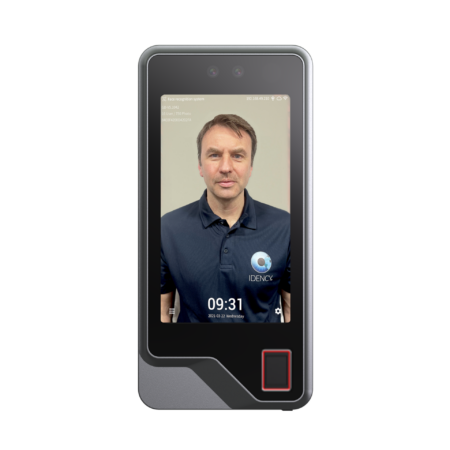
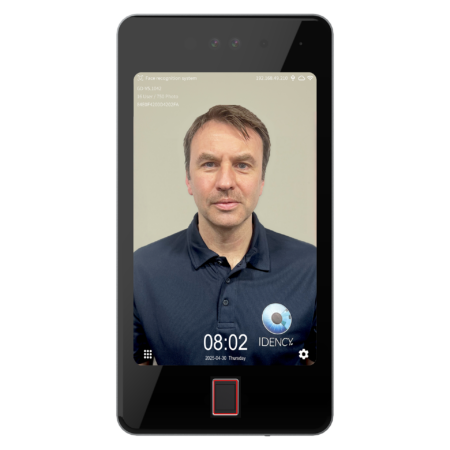
When a user enrols onto an Idency-supported facial recognition terminal, the device analyses key characteristics of the face and converts them into a mathematical template. This template is then used for future comparisons when the user presents themselves to the device.
The characteristics measured during enrolment include:
These measurements are processed by the device’s biometric algorithm and converted into a digital template. The original image used during enrolment is not required for future recognition.
What Is Actually Stored?
The device stores an encrypted biometric template — not a photograph. Think of it like a password hash: information goes in, a secure mathematical representation comes out, but the original cannot be reconstructed from the stored data.
The template is:
Can Someone Recreate My Face From the Stored Data?
No. The biometric template is a one-way representation of facial characteristics. While the system can compare a live face against the stored template to determine a match, it cannot reverse the process and recreate the original face or image.
In practical terms:
Even if someone gained access to the stored template, they would not be able to reconstruct a photograph or visual image of the individual.
Do the Devices Store Photograph?
No. Idency-supported facial recognition devices do not store photographs of users for identification purposes. The system stores only the encrypted biometric template generated during enrolment, which contains the mathematical data required for recognition, not an image of the person.
How Recognition Works Day to Day
When a user presents themselves to the device:
The live image is used only for the recognition process and is not retained as part of the biometric template.
Why Use Facial Recognition
Modern facial recognition offers several advantages over traditional authentication methods:
Today’s facial recognition technology is significantly more accurate and reliable than older biometric methods, making it the preferred choice for many workforce management and access control applications.
Privacy By Design
Facial recognition systems supplied and supported by Idency are designed with privacy and security in mind. The biometric data stored is limited to encrypted mathematical templates used solely for authentication purposes. No photographs, images or visual representations of individuals are stored as part of the facial recognition process.















 English (UK)
  English
  English (Canada)
  Français du Canada
  Svenska
  Português
  Nederlands
  Italiano
  Français
  Español
  Deutsch