






























Varför biometriska mallar inte är foton
En av de vanligaste missuppfattningarna om ansiktsigenkänningsteknik är att den lagrar ett fotografi av varje person som använder den. I stället lagrar moderna system för ansiktsigenkänning en unik matematisk mall – inte en bild. Här är vad det faktiskt innebär och varför det spelar roll.
Vad lagrar egentligen ett ansiktsigenkänningssystem?
När en person registreras i ett ansiktsigenkänningssystem fångar kameran en bild av hens ansikte och identifierar viktiga ansiktsdrag. Systemet omvandlar sedan dessa till en komplex matematisk representation som kallas en biometrisk mall. Originalbilden kasseras och endast den krypterade mallen behålls.
Själva mallen innehåller ingen användbar bilddata och kan inte visas som ett fotografi.
En biometrisk mall är mer likt ett lösenord än ett fotografi
Ett användbart sätt att tänka på en biometrisk mall är som ett mycket komplext lösenord som genereras från dina ansiktsdrag. Precis som en webbplats lagrar en säker lösenordshash i stället för ditt faktiska lösenord, lagrar ett ansiktsigenkänningssystem en matematisk representation av ditt ansikte i stället för en bild av det.
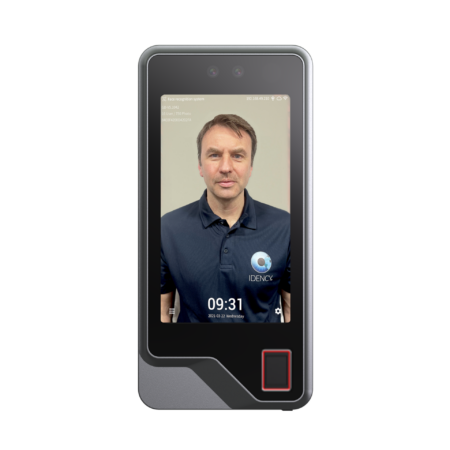
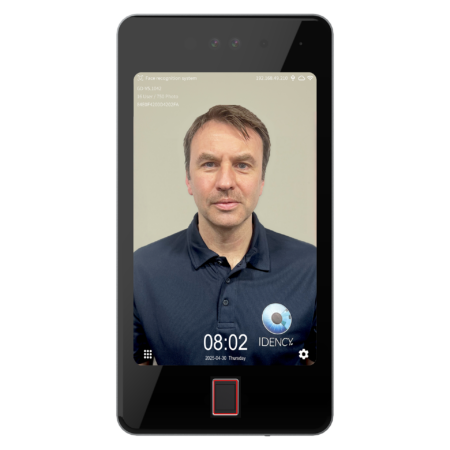
När du visar ditt ansikte för enheten skapas en ny mall som jämförs med den lagrade. Om de matchar inom en acceptabel tolerans beviljas åtkomst eller så registreras stämplingstillfället. Systemet behöver vid inga tillfällen visa eller hämta ett fotografi.
Kan ett ansikte återskapas från en biometrisk mall?
Nej. Moderna biometriska mallar är utformade som enkelriktade matematiska representationer. De data som lagras är tillräckliga för att jämföra en mall med en annan, men de kan inte användas för att återskapa en bild av det ursprungliga ansiktet.
Även om någon skulle få tillgång till en biometrisk mall skulle de inte kunna generera ett fotografi av personen från den. Detta är en av de utama anledningarna till att biometriska mallar anses vara betydligt säkrare än många traditionella former av identifiering.
Vad händer om en databas blir hackad?
Om en databas som innehåller biometriska mallar skulle komprometteras skulle angriparen inte få tillgång till ett bibliotek med fotografier – enbart krypterade matematiska mallar som saknar visuell betydelse. Till skillnad från fotografier kan dessa inte ses eller användas för att identifiera någon visuellt.
Moderna biometriska system använder också ytterligare säkerhetsåtgärder, inklusive:
Varför företag väljer ansiktsigenkänning
Organisationer implementerar i ökad utsträckning ansiktsigenkänning eftersom det erbjuder både bekvämlighet och säkerhet. Till skillnad från kort, PIN-koder eller lösenord kan ansiktsigenkänning inte lika enkelt delas, lånas ut eller glömmas bort.
Skillnaden mellan fotografier och biometriska mallar
| Foto | Biometrisk mall |
|---|---|
| Kan ses av människor | Kan inte visas som en bild |
| Innehåller visuell information | Innehåller endast matematiska data |
| Kan identifiera någon till utseendet | Kan inte identifiera någon visuellt |
| Kan kopieras och delas | Används endast för biometrisk matchning |
| Kan avslöja personligt utseende | Visar ingen användbar bild |
Vanliga frågor
Nej. Moderna ansiktsigenkänningssystem lagrar en krypterad biometrisk mall snarare än ett fotografi av ditt ansikte.
Nej. Biometriska mallar är envägiga matematiska representationer och kan inte omvandlas tillbaka till ett fotografi.
De flesta moderna biometriska system krypterar mallar både när de lagras och när de överförs mellan system.
Ja. Enligt brittisk GDPR och EU:s GDPR betraktas biometriska mallar som används för identifieringsändamål som personuppgifter och bör skyddas därefter.
I många avseenden, ja. En biometrisk mall innehåller ingen användbar bild av en person och kan inte inspekteras visuellt eller rekonstrueras till ett fotografi.
Sammanfattningsvis
Att förstå denna åtskillnad hjälper till att avliva en av de vanligaste myterna kring ansiktsigenkänning och visar varför moderna biometriska system kan erbjuda både stark säkerhet och ett robust integritetsskydd.
Organisationer implementerar i ökad utsträckning ansiktsigenkänning eftersom det erbjuder både bekvämlighet och säkerhet. Till skillnad från kort, PIN-koder eller lösenord kan ansiktsigenkänning inte lika enkelt delas, lånas ut eller glömmas bort.















 English (UK)
  English
  English (Canada)
  Français du Canada
  Svenska
  Português
  Nederlands
  Italiano
  Français
  Español
  Deutsch